What is a yearbook, and why does it still matter?
While commonly recognized as an annual school book of portraits and signatures, a yearbook is fundamentally a record of a chapter of life, defined by the people who shared it with you. Here is how an intimate keepsake became a school ritual, and why giving that record a lasting, physical form matters more than ever.
Written by Philip · Published September 13, 2026 · Updated September 15, 2026
Everyone knows what a yearbook looks like. Fewer people stop to ask what actually makes it one, or why an object that mostly disappears after graduation is still the thing people reach for decades later when they want to remember a specific year.
The basic definition
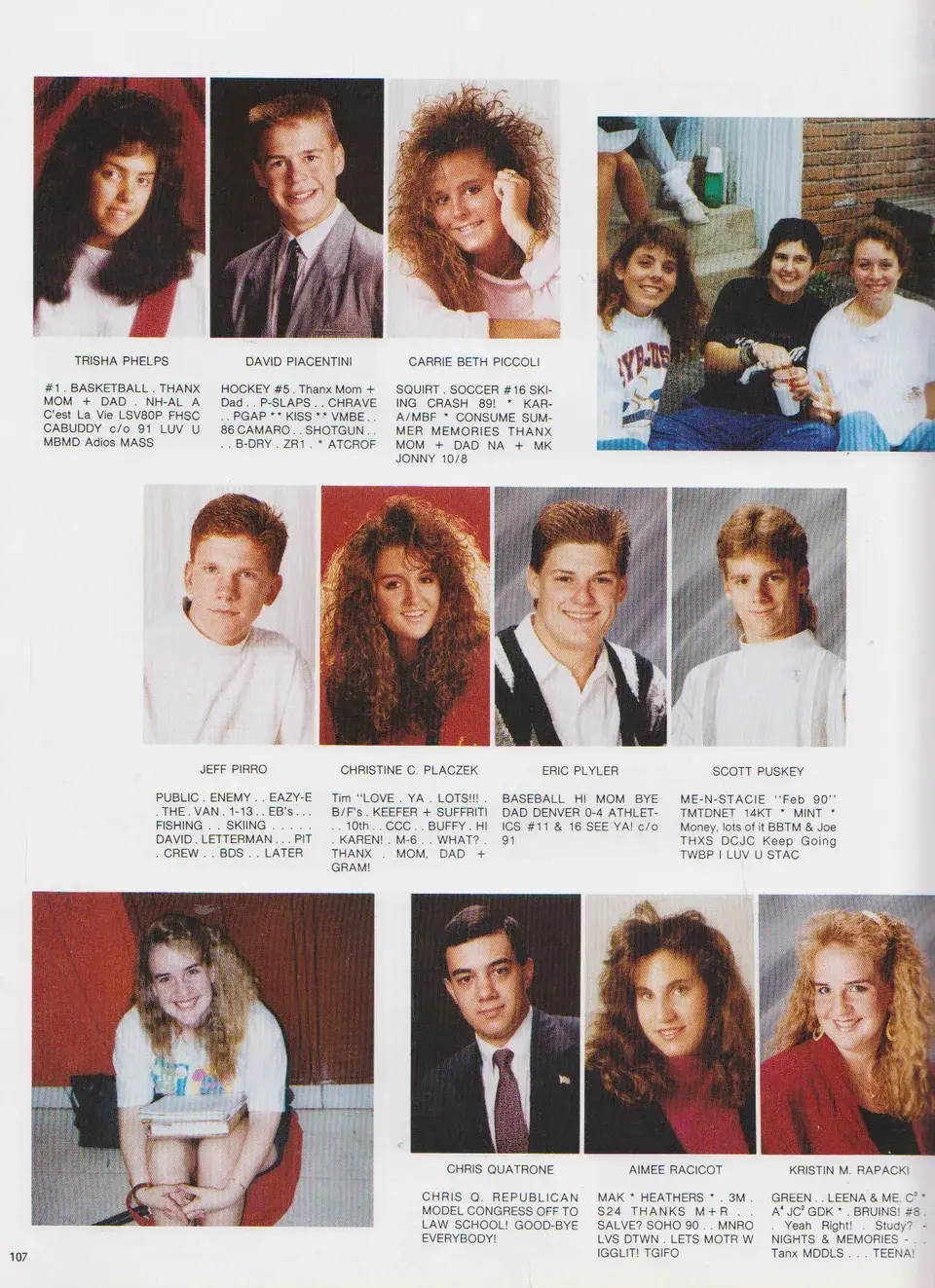
A yearbook is a record of a chapter of life. While modern culture associates it almost exclusively with high schools, its purpose has never been the mass printing, the class rosters, or the school crest on the cover. In modern yearbooks, one of the most distinctive traditions is the signing: people writing personal notes, reflections, inside jokes, and signatures directly into each other's copies. That collaborative layer is part of what gives a yearbook its social character and turns it into a one-of-a-kind keepsake.
That purpose distinguishes a yearbook from other ways of remembering. While a photo book primarily organizes photographs, a journal records personal thoughts, and a scrapbook compiles physical ephemera, a yearbook is designed to preserve a meaningful chapter of life through the people, words, and moments that shaped it.
Where the tradition came from: the alba amicorum
The yearbook did not begin in a school administrative office. Long before the modern school yearbook took its familiar form, a related personal tradition existed: 16th-century alba amicorum ('books of friends'), carried by traveling scholars and students across Europe.
These early books were personal collections. You carried your own blank book and handed it to friends, mentors, professors, artists, and travel companions, who inscribed personal notes, poems, heraldic emblems, and drawings. Over the centuries, this practice evolved into 18th- and 19th-century autograph albums and friendship keepsakes. Long before schools standardized the yearbook, these books provided a personal way to preserve the people, words, and encounters that mattered to their owners.
How schools standardized the ritual
In the late 19th and 20th centuries, American schools and universities industrialized the practice. They built the infrastructure that made the tradition famous: faculty advisors, student yearbook committees, portrait photographers, mass printing contracts, and scheduled signing days.
That infrastructure gave the tradition massive cultural scale. It turned the yearbook into a universal rite of passage. But in doing so, it also created a lasting misconception: it made the tradition feel synonymous with school, as if the yearbook belonged to the institution rather than to the people living through the year.
Why the tradition dies at graduation
When school ends, that institutional infrastructure disappears overnight. There is no homeroom, no committee organizing the photographs, and no distribution day.
Because people assume yearbooks are strictly an artifact of school, they stop making them. But life does not become less meaningful after graduation. You continue moving between cities, changing jobs, falling in love, traveling, building companies, starting families, and making close friends. The desire to mark meaningful chapters and preserve the people who shared them did not disappear. It simply lost the institutional container that once made the tradition effortless.
Why it matters more than ever: digital abundance and tangible permanence
Today, we face a problem earlier generations could hardly have imagined: digital hyper-abundance.
Our smartphones hold tens of thousands of photographs, video clips, and fleeting messages. Because capturing everything is frictionless, we confuse recording with remembering. Digital storage creates an illusion of memory, but endless camera rolls often feel more like unorganized digital clutter than meaningful keepsakes.
Social media made it easier to keep seeing what our friends are doing, but seeing updates is not the same as preserving a shared chapter of life. Even though social media promised to keep us connected, it often reduces relationships to a passive feed. A yearbook asks people to slow down, reflect, and leave something intentional in their own words.
This is why a yearbook is best experienced as a physical book, even though the idea behind it does not strictly require one. A physical book has a permanence that digital media cannot guarantee. Group chats get archived, photo links expire, cloud subscriptions lapse, and platforms fade away. A printed hardcover book with someone's handwriting on the page sits quietly on a shelf. It requires no login, no software updates, and no screen. It rests in your physical space, ready to be pulled down decades from now to remind you who you were and who walked beside you.
The modern return to the personal yearbook
This is why the format is returning to its original personal roots. The school yearbook is built around an institution. The personal yearbook is built around the people and moments that matter, whether that means one person, a couple, a family, or a group of close friends, and it is not bound to a school calendar or a rigid January-to-December timeframe.
To learn about the centuries-old roots of friendship books, read the history of yearbooks. If you’re looking to build one for your own life, see what a personal yearbook is and how yeerbook works.
Frequently asked questions
What makes something a yearbook instead of just a photo book?
A photo book is usually built around photographs first. A yearbook is designed to preserve a chapter of life, combining photographs with reflections, stories, and context. In many yearbooks, it also includes contributions, notes, and signatures from the people who were there, turning the book into a shared social record.
Did yearbooks start in schools?
No. Long before schools created yearbook committees, scholars and travelers in 16th-century Europe carried alba amicorum ("books of friends") for friends and mentors to sign. American schools later popularized and standardized the format, turning it into the familiar institution we know today, but the concept originated as a personal way to preserve meaningful friendships and encounters.
Why do people keep their old yearbooks for decades?
Because they preserve more than what happened. They preserve who was there, what people wrote to one another, and how that period of life felt at the time. A printed photograph captures a moment, while a handwritten note can preserve a relationship and a particular person's voice. A physical book also does not depend on a particular digital platform, account, or piece of software remaining available.
Is a yearbook the same thing as a scrapbook?
No. A scrapbook is typically focused on creatively assembling collected physical ephemera like ticket stubs, clippings, and memorabilia. A yearbook is structured around a cohesive narrative of a specific chapter of life, often incorporating the words, reflections, and signatures of the people who lived it with you.
Can adults still make yearbooks, or is it just a school thing?
Absolutely. The core idea of marking a meaningful period of life with the memories, words, and people who shaped it applies just as well to a family, a friend group, a couple, or a solo year as it does to a graduating class.
Does a yearbook have to cover a calendar year?
No. A year is simply a natural container for a meaningful period of life. A personal yearbook can cover a calendar year, a year living abroad, a baby’s first year, a period living with close friends, or a relationship chapter.
What do you write in someone's yearbook?
There is no required script. The most meaningful contributions are specific shared memories, inside jokes, reflections on what you appreciated about the person, or warm wishes for the future. A specific personal memory holds up far better over decades than a generic note.
Is the yearbook tradition the same everywhere?
No. The standardized school yearbook is primarily an American tradition tied to school committees and photo days. In many other countries, the tradition exists in different forms, such as university keepsakes, autograph albums, or cultural equivalents like Japanese yosegaki boards.
References
- Petrelli, D., van den Hoven, E., & Whittaker, S. (2009). Making History: Intentional Capture of Future Mementos. CHI Conference on Human Factors in Computing Systems, 1723–1732.
- Norton, M. I., Mochon, D., & Ariely, D. (2012). The IKEA effect: When labor leads to love. Journal of Consumer Psychology, 22(3), 453–460.
- Pew Research Center. (2024). When Online Content Disappears. Pew Research Center.
Related reading
Your year, signed by the people who were in it.
No classroom or committee required. Just a year worth remembering, and the people who made it meaningful.
Free to add your first memory. No credit card required.
Gift a yeerbook