What is a personal yearbook?
A personal yearbook is a record of the people, words, experiences, and memories that mattered during a meaningful period or chapter of life. Unlike a school yearbook, it belongs to you, so you decide what deserves a place in it and who should be part of the story.
Written by Philip · Published August 7, 2026 · Updated September 15, 2026
You probably had a yearbook in high school. It might have been filled with class photographs, messages from friends, and signatures from people you spent every day with. Someone probably wrote something like "stay cool this summer" in the margins, along with a promise that you would all keep in touch.
Then you graduated, and the tradition stopped. Your life, however, continued to fill with new places, new people, and new chapters.
You moved between cities, changed jobs, started relationships, traveled, lived abroad, built companies, and met people who became important to you. Some stayed in your life for decades. Others were part of a particular chapter and gradually disappeared as circumstances changed.
The people and experiences that make a period of your life meaningful do not become less important simply because that period eventually ends. A personal yearbook is a way of giving those chapters a lasting record, one you can eventually hold as a physical book.
The short definition
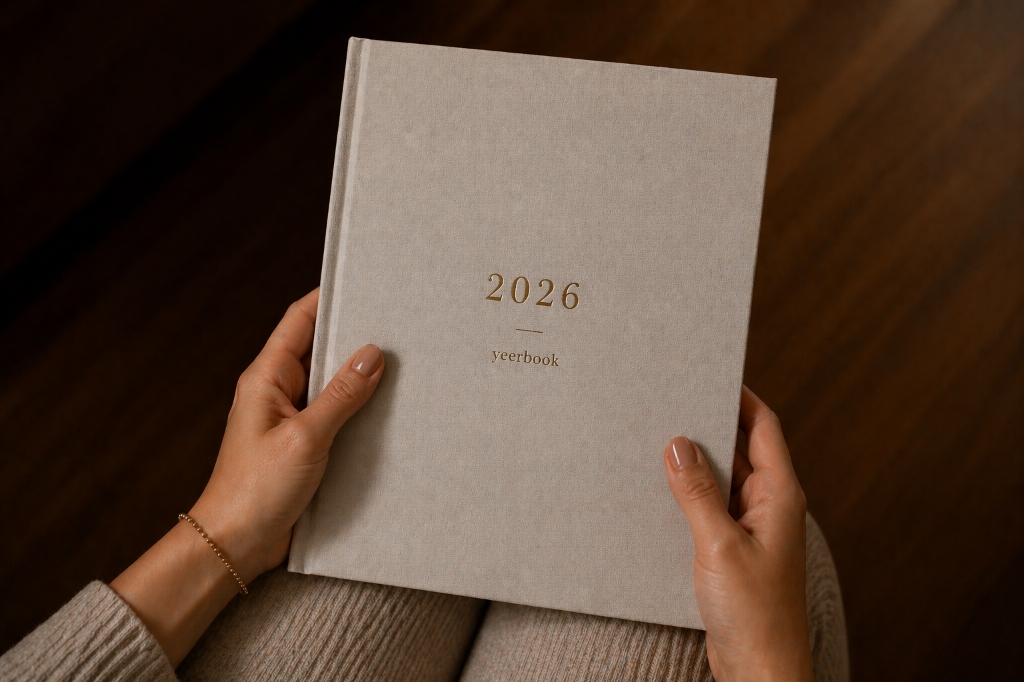
A personal yearbook is a record of a period of your life, built around the people, experiences, and memories that mattered to you.
It might cover a calendar year, a year abroad, a period living with roommates, the early years of a company, a relationship, a particular stage of family life, or simply a year that you want to remember more intentionally.
The important distinction is that a personal yearbook is personal. There is no school, employer, committee, or institution deciding what belongs in it. You choose the photographs, stories, reflections, places, milestones, and people that made that period meaningful.
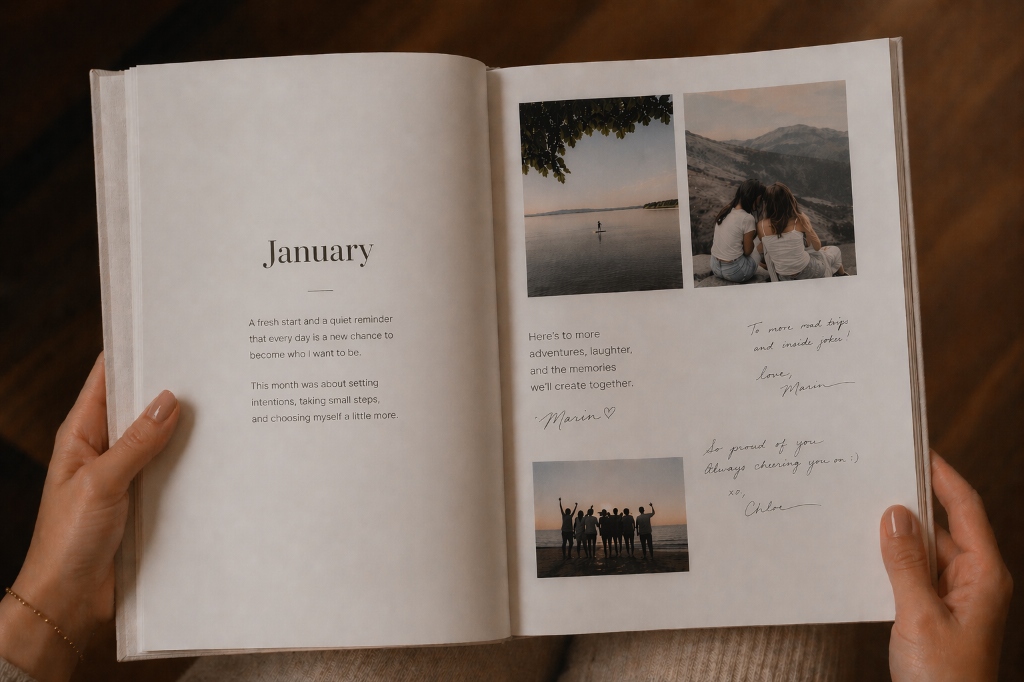
It can also become a shared record rather than something created entirely by one person. The people who were there can contribute their own memories, photographs, drawings, signatures, or messages, giving you a record of the period from more than one perspective.
In that sense, a personal yearbook is more than a collection of things that happened. It is a record of the people and experiences that made a particular chapter of your life worth remembering.
Why call it a yearbook?
The idea is older than the modern school yearbook. It traces back to alba amicorum, 16th-century "books of friends" that European scholars carried and passed to friends, mentors, and travel companions to inscribe with notes, poems, and drawings.
Schools later gave that idea an institutional structure: a defined community, a shared calendar, and a natural point to close the book. A personal yearbook brings the idea back to where it started, preserving the people, words, and experiences that made a period of life meaningful, without needing a school to organize it.
What makes a yearbook personal?
"Personal" does not necessarily mean that the book has to be created by one person.
It means that the book is defined by the people who lived the experience rather than by an institution deciding what everyone should remember.
A personal yearbook might belong to an individual, a couple, a family, a group of friends, or even a small team. What makes it personal is not the size of the group, but the fact that the book reflects the particular experience of the people who shared it.
A school yearbook records membership in a community. A personal yearbook records what that community, relationship, journey, or period of life meant to the people who were actually part of it.
That distinction becomes especially important in adult life, when there is no single institution or calendar defining the chapters that matter. Your year might revolve around a new city, a startup, a relationship, a period of travel, a family, or a group of friends spread across several countries.
There is no single standardized yearbook that could capture all of those experiences. A personal yearbook works precisely because it allows you to decide what your own chapter was about.
A yearbook does not have to be about a calendar year
Despite the name, a personal yearbook does not necessarily have to begin in January and end in December.
The "year" can simply be a useful container for a meaningful period of life. It could be the year you spent living abroad in Asia, your first year building a company, the period you shared an apartment with close friends, your first year of marriage, or the final summer before everyone moved away.
Some chapters naturally last twelve months, while others begin or end because life changes. What matters is not the exact length of the period, but whether there was a collection of people, experiences, and memories that you want to preserve together.
The yearbook format works because it gives those experiences a beginning, a middle, and an end. It turns a continuous stream of life into something you can eventually hold as a complete chapter.
Why not just make a photo book?
A photo book is usually built to showcase photographs. A personal yearbook can certainly contain photographs, but a personal yearbook is built to preserve more than the photographs themselves.
A photograph can show you where you were and what you looked like. A reflection can remind you what the moment meant. A friend's handwritten note can tell you how they remember it. A voice recording can bring back the sound of someone who shared that period of your life.
The difference is therefore less about the physical format than the purpose of the book.
A photo book preserves a selection of images. A personal yearbook preserves a chapter of life, which can include images but also the stories, reflections, relationships, and contributions that give those images their meaning.
Why not just keep a journal?
A journal is generally a record of your own thoughts and experiences. It can be an intimate and valuable way of remembering a period of life, but it is usually a conversation with yourself.
A personal yearbook can include your own reflections while also giving the people who shared the experience a place in the record.
You might write about a difficult month, a memorable trip, a new friendship, or an ordinary Sunday that became meaningful in retrospect. You can then invite someone who was there to leave a note, photograph, drawing, or voice message of their own.
Years later, you are not only reading what you remember. You are also encountering pieces of how someone else remembered the same period.
Why not just save everything digitally?
We can record almost everything now. Our phones hold thousands of photographs, videos, messages, screenshots, and voice recordings, making it easier than ever to accumulate an archive of our lives.
But recording everything is not the same as deciding what is worth remembering.
A personal yearbook introduces an element that an unlimited digital archive does not naturally provide: deliberate selection. A physical book has finite pages, so you have to decide which photographs, stories, people, and moments deserve to make it into the final record.
That constraint can be valuable. Instead of returning to thousands of photographs and trying to reconstruct an entire year from thumbnails, you create a smaller and more intentional record of what actually mattered.
The physical nature of the finished book adds something as well. A handwritten message preserves the particular pressure, slant, and hesitation of the person who wrote it. A photograph sits alongside the words that explain why it mattered. The book can remain on a shelf for years without requiring a login, an application, or a notification to remind you that it exists.
The goal is not to replace your digital archive. Your camera roll can continue to hold everything. The personal yearbook simply gives some of those memories a different destination: a curated physical record of the ones you want to keep returning to.
What does a personal yearbook contain?
There is no required format for a personal yearbook. What belongs in it depends entirely on the period of life you are trying to preserve.
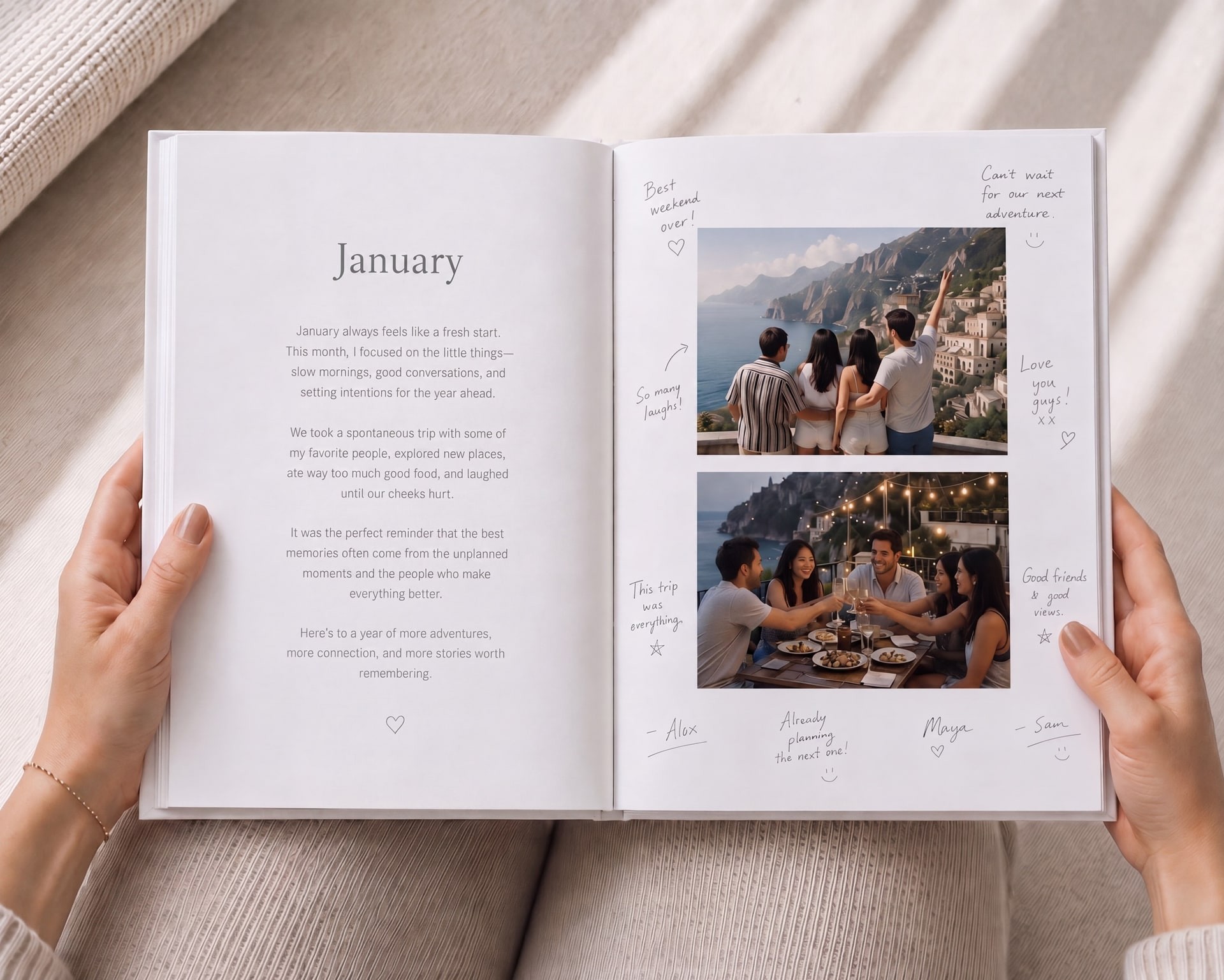
It might include favorite photographs, short reflections, important milestones, stories that would otherwise be forgotten, places you lived or traveled, and small ordinary moments that became meaningful. It might also contain handwritten messages, drawings, inside jokes, photographs, or voice recordings contributed by the people who shared those experiences with you.
The purpose is not to document everything that happened, but to preserve the people, experiences, and memories that mattered most.
How yeerbook brings the personal yearbook to life
yeerbook is built specifically as a personal yearbook, giving your chapter a home without forcing you into a rigid routine.
You can add photographs and reflections as life unfolds, while details are still fresh, or sit down and assemble your year all at once using photos you already have. Whenever someone else was part of a memory, you can invite them to contribute. With a private link sent to their phone, friends and family can write a handwritten note, sketch a doodle, place a photo sticker, or record a voice message directly in their browser without downloading an app or creating an account.
Whether you add moments month by month or build the book in a single weekend, those fragments come together into a permanent hardcover book shipped directly to your door.
Holding the finished book in your hands turns an abstract year into something tangible. Long after digital feeds have scrolled away and phones have been upgraded, the book rests quietly on your shelf, ready to be pulled down and revisited whenever you want to remember who you were and who walked beside you.
The technology makes collecting and organizing the memories easier. The physical book is what remains.
Who it’s for
Anyone who wants to remember a year
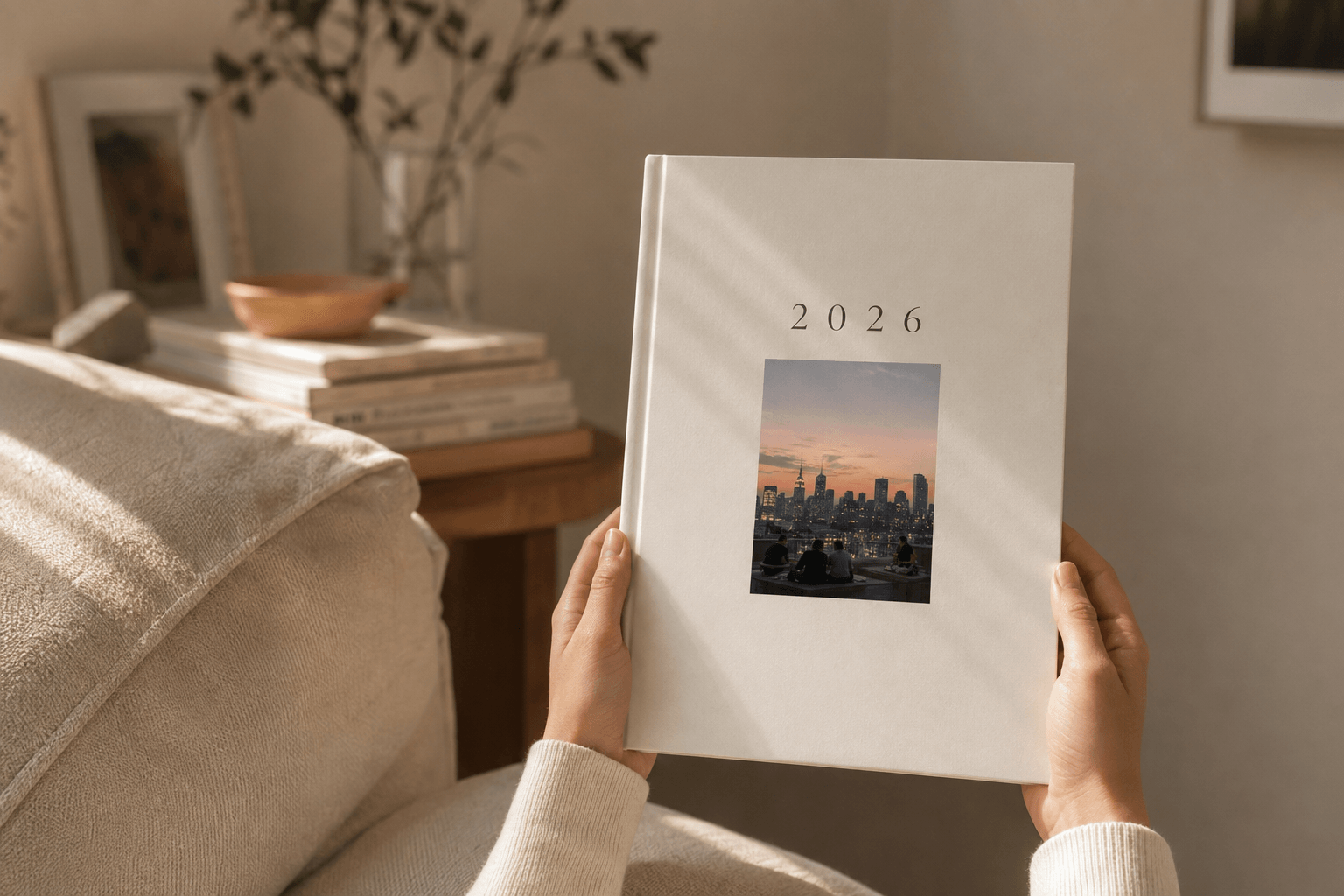
You do not need a wedding, graduation, new baby, or other major milestone to have a year worth remembering. Much of life consists of ordinary days that become meaningful only when you look back at them. A personal yearbook gives those days a place in the story.
Learn more about yeerbook for your personal life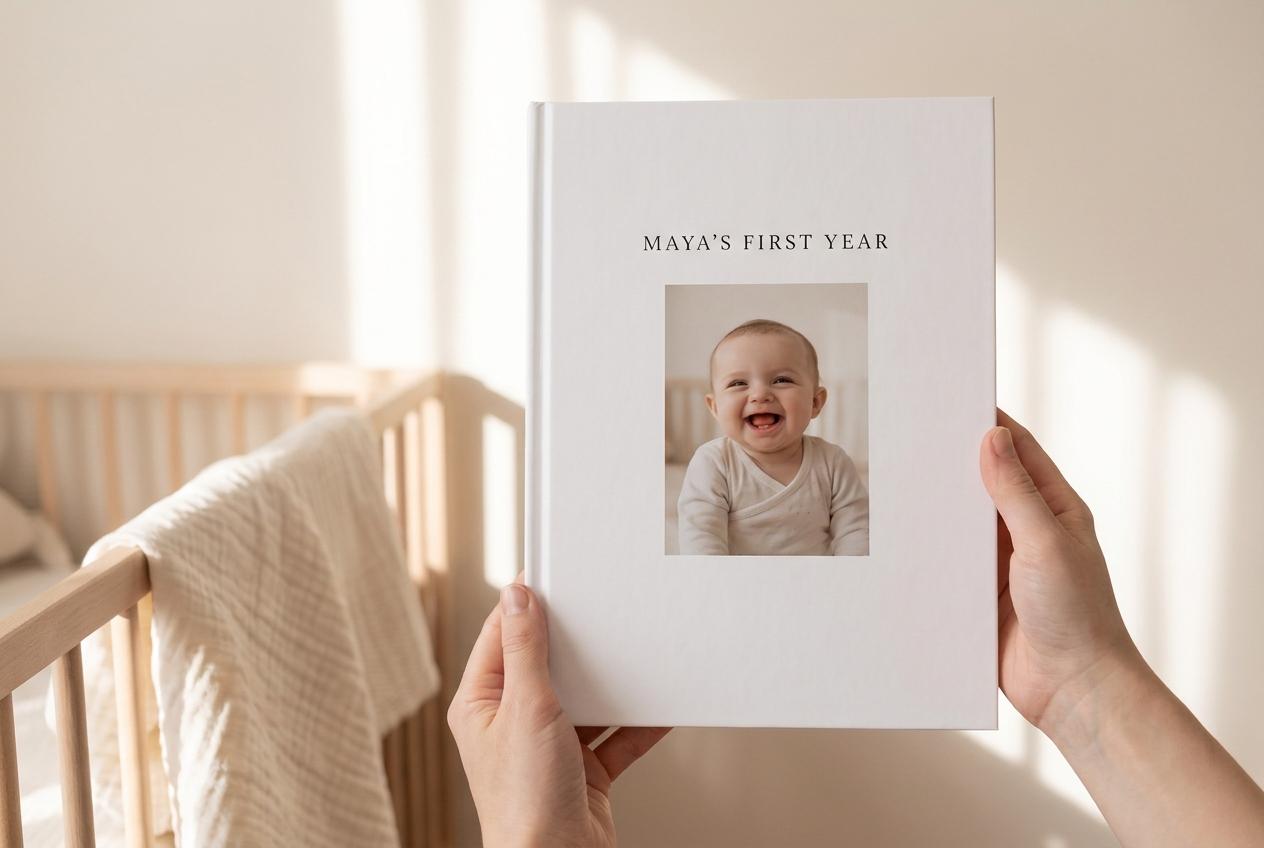
New parents
A baby's first year is full of moments you may wish you could remember more clearly later, from major milestones to the quiet routines that filled the days. A personal yearbook lets you preserve both, including memories and messages from grandparents and other family members.
Learn more about yeerbook for new parentsPeople living through a transition
Moving to a new city, studying abroad, changing careers, leaving a company, or finishing a major project can create intense communities that may not last forever. A personal yearbook gives those chapters a physical record before everyone moves on.
Learn more about yeerbook for life abroadCouples
A year together can become a shared record rather than simply one person's collection of photographs. Both people can contribute memories and leave something for the other to discover later.
Learn more about yeerbook for couplesFamilies
A family yearbook can bring together memories from everyone in the household instead of leaving the family's history scattered across one person's camera roll.
Learn more about yeerbook for familiesFriend groups
When close friends live in different cities or countries, a shared yearbook can preserve the experiences that happened before everyone moved on to different places and stages of life.
Learn more about yeerbook for friend groupsStudents
You do not have to wait for the school to make the yearbook. You can create your own record of the friends, places, and experiences that made your particular year meaningful.
Learn more about yeerbook for studentsFrequently asked questions
Is a personal yearbook the same as a school yearbook?
No. A school yearbook is an institutional record of a shared school community. A personal yearbook is created around the people, experiences, and memories that mattered to you. You decide what belongs in it and who contributes.
Is a personal yearbook the same as a photo book?
Not exactly. A photo book is primarily organized around photographs, while a personal yearbook can combine photographs with reflections, stories, contributions from other people, handwritten messages, drawings, and other memories. The distinction is less about the printing format and more about what the book is intended to preserve.
Is a personal yearbook the same as a journal?
A journal is primarily a record of your own thoughts and experiences. A personal yearbook can include those reflections while also incorporating the memories and words of the people who shared the experience with you.
Does a personal yearbook have to cover a calendar year?
No. A year is simply a natural container for a chapter of life. You can make one around a year abroad, a major trip, a relationship, a startup chapter, a period living with roommates, or another meaningful period of your life.
Do other people have to sign it?
No. A personal yearbook can be entirely your own record. Inviting the people who shared the experience to contribute gives the book another dimension: you preserve not only your own memory of a chapter, but pieces of theirs as well.
When should I make one?
You can begin anytime. You do not need a major milestone, and you do not need to wait for January 1st. Some people build their book month by month as the year unfolds, while others start mid-year and backfill earlier months using photos they already have, or assemble the entire year at the end. The important thing is to give yourself a way to capture the details while they are still close enough to remember clearly.
What if I don't take many photos?
You do not need thousands of photographs. A meaningful personal yearbook can be built from a relatively small selection of images combined with reflections, stories, and contributions from other people. The goal is not to capture everything, but to choose what is worth keeping.
Related reading
Your year, signed by the people who shared it.
Your year is more than a folder of photographs. It is made up of the people you met, the places you lived, the ordinary days you did not expect to remember, and the experiences that changed you.
A personal yearbook gives those memories a physical place to stay, while giving the people who shared them a place to leave their mark.
Free to add your first memory. No credit card required.
Gift a yeerbook